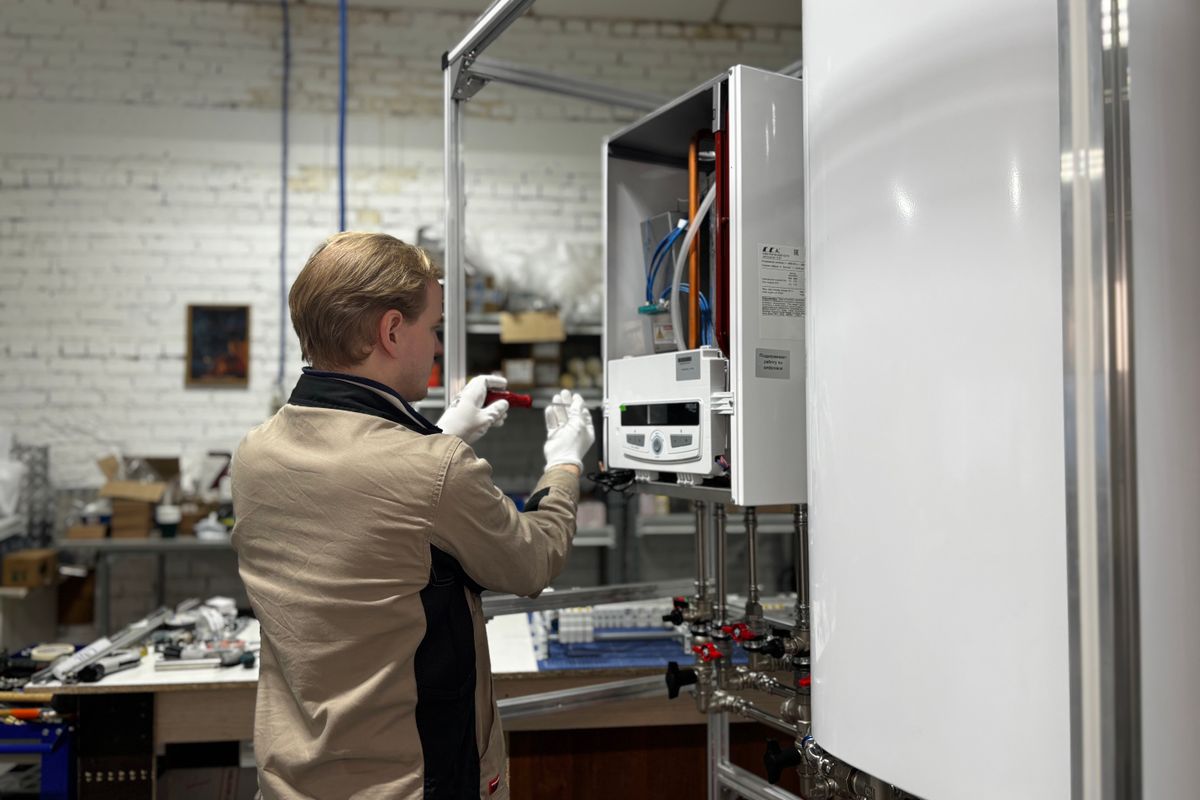
Water heaters are one of those appliances people forget about completely — until they fail. And when they fail, they tend to fail spectacularly: a flooded utility room, a cold shower on a February morning, or a $3,000 emergency installation on a weekend.
The good news: water heaters usually give you warning signs before they completely give out. Here's what to watch for — and what each sign means for your timeline.
Sign 1: Age
This is the most important one. A conventional tank water heater in Toronto has a lifespan of 8–12 years. Tankless units last 15–20 years with proper maintenance. Check the serial number on your unit — the manufacture date is usually encoded in it. If your tank is over 10 years old, it should be on your radar for replacement, regardless of whether it's showing other symptoms.
Sign 2: Rusty or Discoloured Water
If hot water from your taps is coming out orange, brown, or with a metallic taste, your tank is likely rusting from the inside out. This happens when the sacrificial anode rod — a magnesium or aluminum rod that protects the tank lining — has been depleted and wasn't replaced.
Once internal rust starts, the tank will eventually fail and leak. At this point, replacement is almost always the right call — repair isn't feasible for a rusted tank.
Sign 3: Rumbling or Popping Sounds
Loud rumbling, popping, or banging when your water heater runs is the sound of sediment. Minerals from Toronto's water (calcium, magnesium) build up on the bottom of the tank over time. When the burner heats the water, it forces through this sediment layer — hence the noise.
Beyond being annoying, sediment buildup forces the burner to work harder (higher energy bills), reduces capacity, and accelerates wear on the tank lining. Flushing the tank annually prevents this. If it's already severe, the tank may be nearing end of life.
Sign 4: Leaking Around the Tank
Any visible water around the base of the tank is serious. Small leaks often indicate a failing temperature and pressure (T&P) relief valve, a loose connection, or — most seriously — a crack in the tank itself. A cracked tank cannot be repaired. It needs immediate replacement.
Don't ignore even small puddles. A hairline crack can become a catastrophic failure — and water damage to a finished basement can cost tens of thousands to remediate.
Sign 5: Not Enough Hot Water
If your household's hot water demands haven't changed but you're running out faster than you used to, sediment buildup may have reduced your effective tank capacity. The bottom of the tank fills with sediment, leaving less room for hot water.
It can also indicate a failing heating element (electric) or a faulty thermostat on a gas unit. A service call will identify which. If the unit is old, replacement often makes more sense than repair.
Sign 6: Frequent Repairs
If your water heater has needed two or more repairs in the past three years, do the math. Every repair on an aging unit is money spent on something that may fail again in six months. The general rule: if repair costs more than half the price of a new unit, replace it.
A new tank water heater in Toronto typically costs $1,200–$2,500 installed. A new tankless runs $3,000–$5,000 installed. Compare that to repeated repair bills on a 10-year-old tank.
Sign 7: Rising Energy Bills
An aging water heater loses efficiency. As sediment builds up, as components wear, and as insulation degrades, the unit has to work harder to maintain temperature — and that shows up on your gas or hydro bill.
If your energy bills have crept up without obvious explanation, your water heater (or furnace) is a likely culprit. A new high-efficiency unit can be significantly cheaper to run than the one it replaces.
Tank vs Tankless: What Should I Replace It With?
If you're replacing a tank, it's worth considering a tankless (on-demand) water heater. Tankless units heat water only when you need it — no standing heat loss, virtually unlimited hot water, and a 15–20 year lifespan. The upfront cost is higher, but operating costs are typically 15–30% lower, and you'll likely never run out of hot water again.
Not every home is a good candidate for tankless (gas pressure and venting requirements matter), but it's always worth discussing during a quote.
If your water heater is showing any of these signs, call Alderwood Mechanical at 437-229-8618. We offer same-day water heater replacement across Toronto and the GTA — no rental agreements, no long-term contracts, just an honest quote and a clean installation.
Alderwood Mechanical serves Toronto, North York, Scarborough, Etobicoke, Mississauga, Vaughan, Markham, Oakville, and surrounding GTA. G1 licensed gas fitters. No contracts. Upfront pricing.